Resilience
Through
Our Eyes
A Virtual ExhibitionYoung photographers across Africa document how communities navigate disaster risk and climate change — in their own words, through their own lens.



Scroll
Young photographers across Africa document how communities navigate disaster risk and climate change — in their own words, through their own lens.
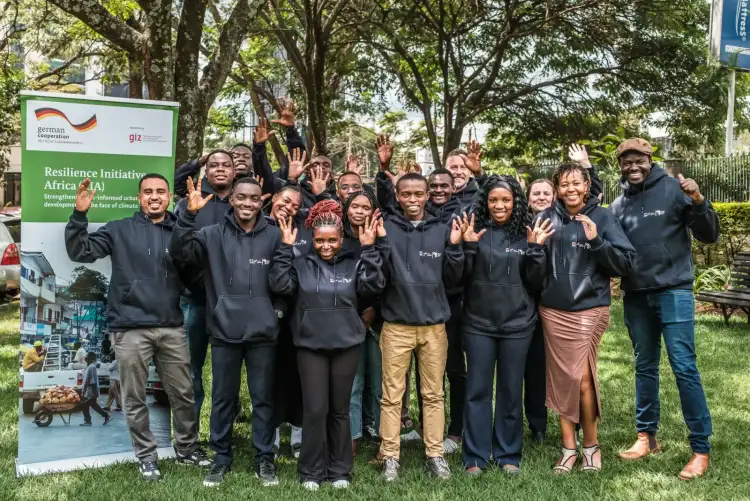
Resilience Through Our Eyes is a youth photography storytelling initiative and exhibition that highlights how urban communities — especially those living in informal settlements — experience, navigate and respond to disaster risks and climate change.
The effort is supported by the German Federal Government through the GIZ's Resilience Initiative Africa project and carried out in collaboration with the African Union Commission and Slum Dwellers International.
The initiative provided young people with hands-on photography training and mentorship over three months. Their photographs document transformational changes in their environments to amplify community voices, highlight community-led solutions and contribute to broader conversations on urban resilience across Africa.
Nine photographers. Five countries. One shared vision of community-led change.
Mathare, Kenya's second-largest informal settlement, is home to more than 200 000 people. With no formal waste management system, rubbish often ends up in the streets or the river, worsening flooding and threatening lives and property during the rainy season. Many young people are unemployed, but Benson Kyalo has found a way to make an income. The 27-year-old collects discarded metal tins and cleans, cuts and reshapes them into money boxes that help families keep their cash safe. In a tough environment, he transforms waste into opportunity.
In Ondangwa, a small town in Namibia, discarded glass bottles often litter the streets. But Aktofel Tomas sees every piece as a chance to create something new. Every day, he collects empty bottles, cleans, cuts and polishes them, and transforms them into drinking glasses that local liquor outlets can use again. The painstaking process gives the bottles a new life, reducing the need for new glass and lowering environmental impact. It also provides a steady income so Aktofel can support his household.
In Accra, the rains provide a welcome break from the heat, but heavy downpours quickly turn streets into streams, and moving around becomes a challenge. Oheneba Kwadwo Safo saw this cycle repeat itself. In 2023, he gathered a small group of volunteers to clear blocked drains and collect waste from the streets. That effort grew into BuzStopBoys, a youth-led initiative that brings together people to improve sanitation and reduce flooding. What began as a small group has grown into a network of committed volunteers.
In Mwanza on the shore of Lake Victoria, fishing sustains life. For 24-year-old fisherman Ashilaf, it's a way to earn a living and support his community by supplying fresh fish for markets and households. But these days strong winds and unpredictable weather as a result of climate change make daytime fishing dangerous, so Ashilaf heads out at night when the waters are calmer. This shift to night fishing is a local response to environmental change.
Irene Mose Chiokoma, a resident in Kanyama, Lusaka, refuses to let her disability define her. In her small yard, neatly arranged sacks hold corn, sweet potatoes, onions and eggplants that thrive even in unpredictable weather. Irene works the soil, harvests what she needs and cooks for her family. Her garden provides a steady source of food and frees the household from relying on the market.
In the Oshikoto region of northern Namibia, cousins Magdalena Moses (30) and Martha Shemuvalula (24) regularly walk around 2km to a nearby pond during the rainy season to collect rainwater, carry it home and carefully store it in a 500-litre tank for use during the dry months. Through grassroots climate adaptation, they turn seasonal rainfall into long-term water security.
In the large informal settlement of Kanyama, two young women are turning plastic waste into possibility. Veronica and Joyce collect discarded plastic carriers and mineral water packs, and transform them into durable bags and mats to use in the home. Through innovation, they are not only creating useful products, but also reducing unmanaged plastic waste and helping to keep their community cleaner and healthier.
In Apam, a coastal town in Ghana's Central Region, erosion and declining fish stocks are putting homes, livelihoods and education at risk. As uncertainty grows, women carry much of the weight of survival. Through hard work, care and persistence, they hold families together and keep life moving forward.
In the informal settlements of Lusaka, nearly 90% of what families eat is bought from informal traders and local markets vulnerable to droughts and extreme weather. As a supervisor at the Urban Innovation Centre, 28-year-old Shadreck Sichalwe shows residents how to grow crops even in very small spaces — such as cherry tomatoes growing in hydroponic systems. Community members also learn how to cultivate black soldier flies from household waste, creating a protein-rich feed for chickens and fish and turning waste into a resource.
Christina Kanguvi's new one-bedroom house in Okahandja Park, Windhoek, is the culmination of a dream her late mother had for many years: a safe place the family could finally call home. Built through a partnership between the Shack Dwellers Federation of Namibia and ABT Panels Namibia, the house is constructed from climate-responsive materials that stay cooler in the heat and warmer in the cold. Such housing represents dignity and a step toward a more resilient future.
In the informal settlement of Chikolokosho, 62-year-old Maria faces the daily reality of water scarcity. With no running water in her home, she turns the essential task of collecting water into a disciplined routine. Rising at 6:00 am to beat the long queues at community taps, she carefully manages her daily supply, using about 10 buckets to sustain her household's cooking, cleaning and bathing needs. While the cost and physical toll of daily water collection are significant, Maria's unwavering determination ensures her family's needs are met. Her resilience lies in her ability to maintain a steady, organized household despite the challenges of her environment.
In the Mabatini community of Mwanza, Tanzania, the Mirongo River's expanding banks once posed a constant threat of flooding and erosion. Residents decided to take action to protect their homes and environment. Since January 16, the community has spearheaded an initiative to plant over 900 trees along the riverbank. This collective effort not only stabilises the soil to prevent further erosion but also helps regulate local temperatures and promotes cleaner air. By taking charge of their local landscape, the community is building a more resilient, safer future for their habitat.
In the informal settlement of Kibera, young artists from the Visionaries Youth Group are transforming community walls into powerful murals that tell a story of resilience, creativity and hope. For these youth, mural painting is more than just art; it is a source of livelihood and a visual platform to amplify community voices and inspire positive change. Their vibrant artwork reshapes the local landscape, creating awareness and fostering connections that strengthen the collective spirit of the community.
This exhibition is made possible through the collaboration of leading organisations committed to African urban resilience.
.png)
In partnership with